SMC X-1 is a high-mass X-ray binary containing a neutron star with a spin period of 0.7 seconds. In addition to its 3.9-day orbital period, the system exhibits superorbital modulation, with its X-ray brightness varying on a nonstationary timescale of approximately 40-65 days. SMC X-1 is one of the brightest accreting X-ray pulsars and a nearby analog of ultraluminous X-ray pulsars. A long-standing question is whether its superorbital modulation is driven by intrinsic changes in the mass accretion rate (i.e., the propeller effect), or by a changing viewing geometry associated with a precessing, warped accretion disk.
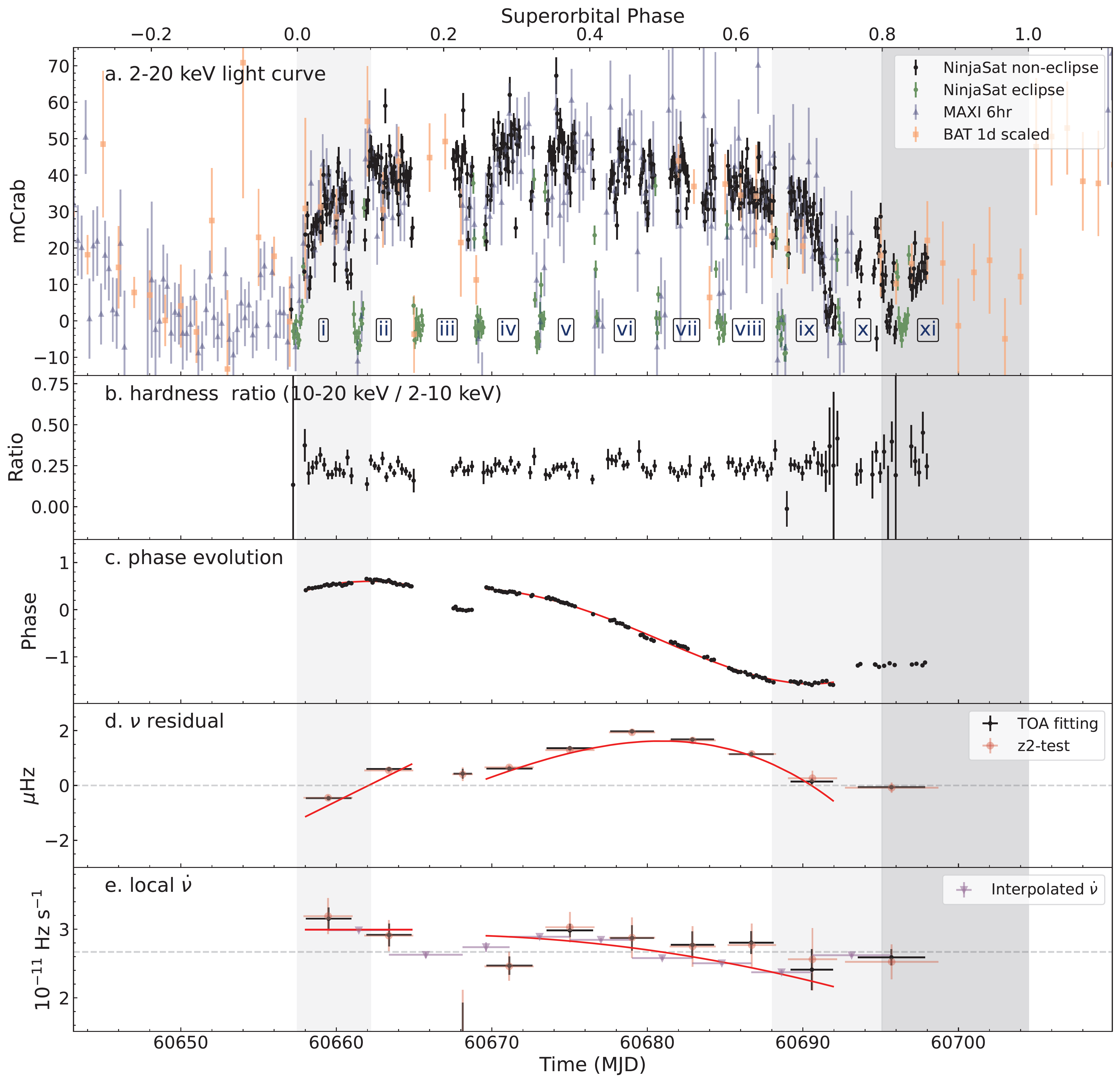
In our study, we used NinjaSat, a 6U CubeSat X-ray observatory, to perform high-cadence monitoring over 41 days, covering nearly an entire 47-day superorbital cycle. Although the 2-20 keV X-ray flux varied by at least a factor of five, the neutron star continued to spin up throughout the campaign. Its spin-up rate showed no significant correlation with the observed flux, while the rate during the high state remained consistent with its long-term average. The hardness ratio and spectral shape also remained broadly stable, while the partial covering fraction increased to above 90% during the low state.
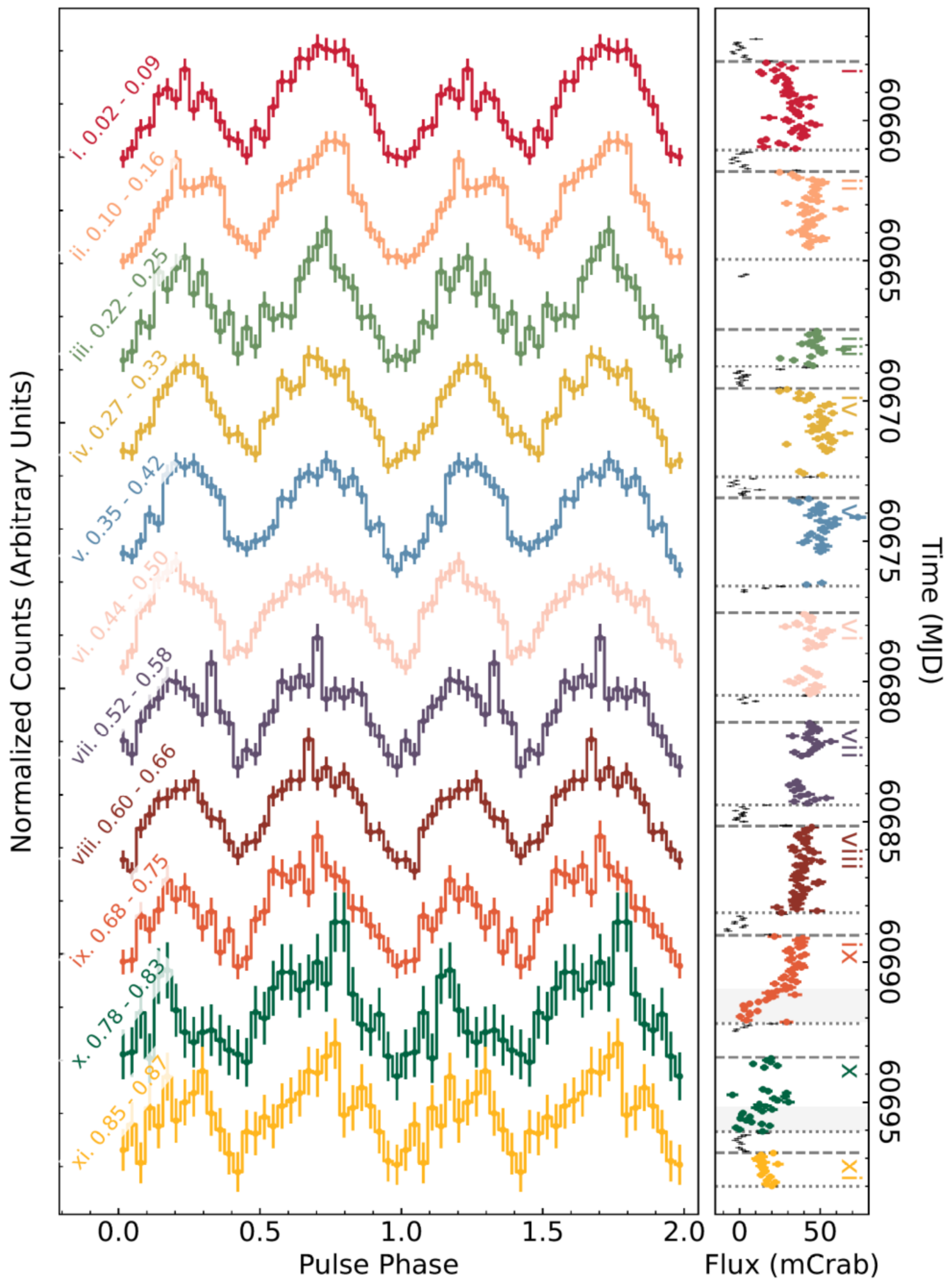
These results strongly favor a geometric origin for the superorbital modulation. The observed flux variations are likely caused by a precessing, optically thick warped accretion disk that quasi-periodically obscures the neutron star, or by nearly energy-independent scattering in highly ionized material, rather than by large intrinsic changes in the accretion rate. We also found that the double-peaked 2-20 keV pulse profile evolves with superorbital phase. This behavior may result from the two emitting hotspots being obscured by different percentage, or from free precession of the neutron star. In addition to providing new insight into the geometry of SMC X-1, this study demonstrates that CubeSat observatories can provide the long-term, high-cadence observations for investigating bright and rapidly varying X-ray sources.